
A message from our Clinical Director, Jillian.
Let's talk about vertebral compression fractures...
A vertebral compression fracture is a small break in one of the bones of the spine (a vertebra) where the bone partly collapses or “compresses,” often making the vertebra shorter and more wedge-shaped.
With osteoporosis, the bone is weaker, so this can happen from a minor fall — or even from everyday movements like bending, lifting, or twisting. And here's the tricky part: many vertebral fractures aren't obvious right away. Some people have significant pain (i.e. sudden mid-back pain or pain that's worse with standing/walking), while others have very little pain (or none at all) and only find out later on imaging. Sometimes loss of height or a more rounded upper back can occur over time.
Why vertebral fractures matter
- They're one of the most common osteoporotic fractures in adults over 50.
- After one vertebral fracture, the risk of another fracture can be highest in the first year.
- Pain, posture changes (increased rounding/kyphosis), and fear of movement can lead to a “spiral” of doing less — which can reduce strength, balance, and independence.
What I want you to know is this: Progress is Possible. With the right approach, people can regain confidence, improve posture and strength, and get back to meaningful activities — safely.
Physiotherapy for vertebral fractures focuses on pain management while building on safe, functional movements and a step-by-step plan that increases capacity without flaring symptoms. That often includes walking progression (starting small and building up); posture and “spine-sparing” strategies for daily life; balance training to reduce fall risk; and strength training progression (timed appropriately with healing).
If you've had a vertebral (spinal) compression fracture, your plan should be individualized — because your starting point, symptoms, and confidence level are unique to you.
To Your Health,
Jillian
Physiotherapist & Clinical Director

Progress is possible after a vertebral compression fracture. The key is to begin gently, build gradually, and keep moving forward — building strength and confidence step by step with consistent, safe movement. Small, steady efforts add up to meaningful, lasting change.
Therapist's Corner
When someone has had a vertebral fracture, we want to avoid the “boom-bust” cycle (doing too much on a good day → paying for it later). A few examples of what that can look like:
- Movement first: short walks (even a few minutes) spaced through the day.
- Technique over intensity: learning a hip-hinge strategy for daily tasks (like loading a dishwasher, picking something up, or getting dressed).
- Progressions with smaller steps: wall push-up → counter push-up → incline push-up (instead of jumping straight to the floor).
- Balance you can build into your day: a safe “standing balance” drill at the kitchen counter while waiting for the kettle.
It's common to feel anxious after a fracture: “What if I fracture again? Is exercise safe? Should I stop bending forever?” A good rehab plan avoids fear-based rules and instead teaches safer strategies and graded exposure, so you build trust in your body again.
Spine-sparing strategies are techniques and modifications designed to protect the spine from injury during daily activities and exercise, especially for those at risk of fractures or back pain — but it doesn't mean “never move.”
- Move with control, avoiding rushed, end-range, twisted, heavy movements, especially when you're fatigued.
- Learn to hinge at your hips & squat rather than rounding your back.
- Keep loads close to your body & engage your core.
- Break tasks into smaller chunks.
- Use tools that help — grabber, raised surfaces, Activator walking poles, etc.
Client Spotlight: Terry
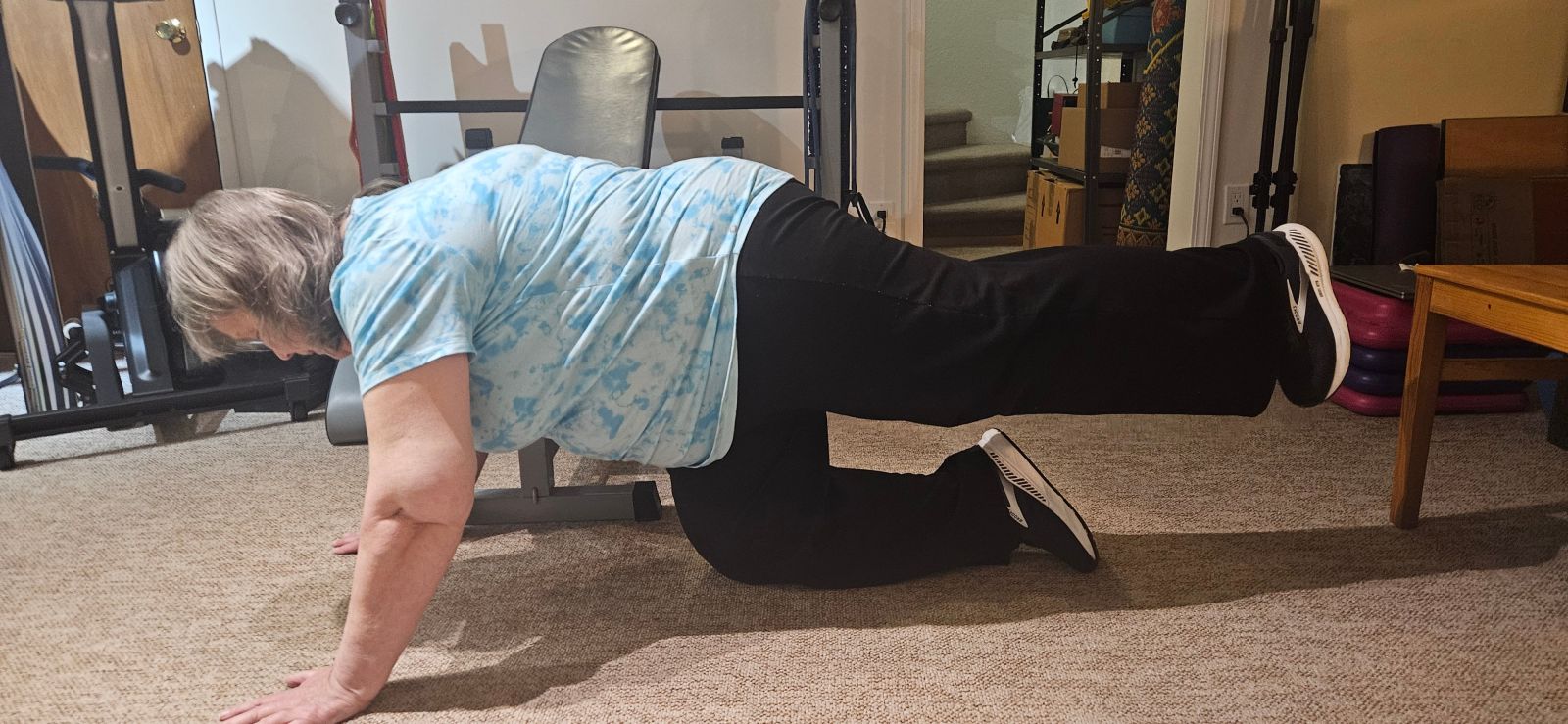
A year ago, Terry couldn't imagine doing something as simple — and as meaningful — as pulling a rhubarb stalk from the garden. This spring, she did it.
Terry's compression fracture story didn't start with overwhelming pain. The first couple of fractures were manageable with tools like a TENS unit and Tylenol. But as the fractures added up, everything changed. Showering became painful — especially washing hair. Turning in bed and getting out of bed felt impossible. Standing hurt. Even when short walks were doable, Terry's confidence shrank. Her biggest fear was walking outside: what if I go too far and can't get back?
The turning point came when Terry realized she needed more than just “getting through” the day — she needed a plan. After finding helpful education online, Terry learned practical strategies like log rolling and added simple supports at home, like a short bed rail. That path led her to PhysioCare at Home where she connected with a BoneFit-certified physiotherapist, and the focus became clear: safe movement, progressive movement, and rebuilding trust in her body.
Wins came in layers. First: washing her own hair again. Then: walking to the end of the block. Gradually: lifting a leg into the tub, standing in the shower instead of using a stool, and taking bigger steps with short, consistent walks and modified strengthening — like hip hinges and modified burpees. Even a grabber (reacher aid) became a symbol of freedom: independence without risking unsafe bending.
Today, Terry can carry a bag of groceries, shower pain-free, and move through daily life with more ease — right down to the little things that matter, like putting on socks or wearing a bra comfortably. Flare-ups still happen, but Terry has a strategy: heat, TENS, gentle movement, and returning to the foundational exercises. Recovery time has shortened from nearly a week to a couple of days.
Terry's message to others starting out is powerful: this is a condition you can survive. Movement — especially progressive, supported movement — is key. Having a supportive team is essential (PT, OT, doctors), but Terry is clear: the exercises and consistency are what change the story. Terry's physiotherapist, Jillian, is so incredibly proud of all her hard work over this last year — from barely being able to get out of bed to now performing a 30 lb modified deadlift & a 40 lb lat pulldown! Terry has proved time and again that progress is possible, movement is medicine, consistency is key, and health is wealth.
Nutrition Tip
Recovering from a vertebral compression fracture takes time, and alongside physiotherapy and safe movement, proper nutrition can play an important role in supporting bone healing, strength, recovery, and long-term bone health — especially when osteoporosis is a contributing factor.
1. Prioritize calcium-rich foods. Good sources include milk, yogurt, and cheese; fortified plant-based beverages; canned salmon or sardines with bones; tofu; leafy greens; beans and legumes. Adults over 50 often require approximately 1200 mg of calcium daily.
2. Don't forget vitamin D. Vitamin D helps the body absorb calcium properly. In Canada, it can be harder to obtain year-round from sunlight alone, especially in winter. Good sources include fortified milk or plant beverages; fatty fish such as salmon or trout; egg yolks; and vitamin D supplements (speak with your healthcare provider). Health Canada recommends many adults over 50 take a vitamin D supplement daily.
3. Eat enough protein. Protein helps repair tissues and maintain muscle strength, which is important for posture, balance, and fall prevention after a fracture. Good sources include fish, chicken, eggs, Greek yogurt, beans and lentils, nuts and seeds.
4. Stay hydrated. Pain medications, reduced mobility, and changes in activity can increase the risk of dehydration and constipation. Drinking enough water throughout the day is important during recovery.
5. Support strength and balance. Nutrition works best alongside safe movement and exercise. Strength, balance, and posture exercises can help reduce future fall and fracture risk.
Recipe of the Month

Check out this recipe for Roasted Veggie Cobbler from Osteoporosis Canada.